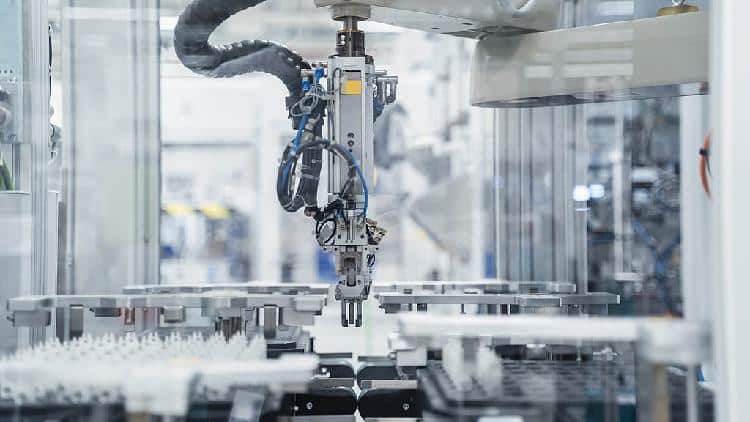
PVC pipe fitting molds today play a vital role in the production of components that are used in plumbing, electrical conduit systems, and all other industrial applications. China has become a powerful player in the global manufacturing centers in the production of high-value and cheap PVC pipe fitting molds. With decades of experience, the newest manufacturing facilities, and a very robust supply chain, Chinese mold manufacturers are serving the markets on both sides of the oceans, from Asia to Europe, to Africa, and the Americas. PVC, polyvinyl chloride, is a common plastic used in both plumbing and infrastructural systems around the world. Its durability, corrosive nature, and relatively low cost make the propylene-ethylene copolymer pipe desirable for pipe installations. However, molded PVC fittings are necessary to connect, redirect, or branch out these pipes.
Apart from technological abilities, Chinese mold producers are also renowned for their competitive pricing, their ability to deliver in a short time and to be flexible enough to customize molds to fit specific client requests. Consequently, small scale manufacturers and multinationals depend on Chinese suppliers for their mold tooling needs.
This deep dive looks at how PVC pipe fitting molds are manufactured in China, what drives their popularity worldwide, and considerations for buyers when sourcing molds from the region.
What is a PVC pipe?

PVC pipe is one of the plastics pipes made with polyvinyl chloride, which is durable, light- weight, chemically resistant plastic. It is extensively used in plumbing, irrigation, drainage and conduit systems because of its resistance to corrosion, availability and ease of installation.
Here goes the list of some main characteristics of PVC pipe:
- Non-corrosive: Unlike metal pipes, PVC does not corrode or rust.
- Lightweight: Easier to handle and transport.
- Strong and durable: Chemically resistant, pressure, and impact resistant.
- Low maintenance: Needs few routine activities during its long service life.
- Versatile: In various sizes, thicknesses, and pressure ratings.
PVC pipes are also utilized for residential as well as industrial purposes; namely, PVC pipes are;
- Drinking water supply systems
- Wastewater and sewage systems
- Electrical cable protection
- Agricultural irrigation
- HVAC ducting
Why Molded PVC Fittings are important?

Molded PVC fittings guarantee pipes connect flawlessly and have structural strength. These fittings are designed by advanced software and produced with great precision. A superior pipe fitting mold enables producers to manufacture articles that comply with international standards in large quantities.
They are important in supplying and irrigation water and industrial piping systems. With lack of properly molded fittings leakages and pressure would occur hence increasing maintenance cost and risks. That is why sure industries with huge investments weigh their options in favor of high-class molds.
Pipe Fittings Sizes
With PVC pipe fittings, an important characteristic to know is the nominal size. This term means a labeling system that is used for pipes and fittings, and the size in the name represents the standard dimension for compatibility. For example, a 1″ PVC fitting connects with a 1″ PVC pipe.
However, there’s an important distinction: OD of PVC is also relatively larger than the size said. A 1” PVC pipe is going to have an OD greater than 1” and a 1” fitting is even greater in OD. Still, a 1” fitting can still still fit a 1” pipe as they both have the same size standards.
When joining PVC fittings to other materials such as metal pipes, attention to the outer diameter of the pipe rather than the nominal size is of essence. Even though 1” carbon steel and 1” PVC pipe have the same nominal size they may not necessarily fit each other because they may have different OD. Never miss compatibility by comparing OD and ID for exact connections.
PVC End Types and Adhesives
Some adhesives are necessary for sealing PVC pipe fittings properly. Although PVC pipes and fittings fit nicely together without any adhesive, they won’t seal water-tightly. This is important for fluid-carrying systems.
Many of the PVC pipes do not have threaded ends, which is why slip ends are typically used in many fittings. These slip fittings allow the pipe to slide into the fitting, but to have a non-dripping joint, the joint must be sealed with PVC cement. This bonding agent does this by chemically bringing the plastic together. For a good bond, both PVC primer and PVC cement are necessary. The primer makes the inner surface of the fitting soft, and the cement provides a strong and watertight match-up.
There is another way of sealing between threaded fittings. Threaded fittings are made so that they can be dismantled, and therefore PVC cement would not allow them to be unscrewed. Instead, PTFE thread seal tape is normally used to cover the male threads.
Furniture Grade Fittings Vs. Regular Fittings

One of the frequently asked questions from customers is what the difference there is between furniture-grade fittings and standard fittings. The main difference is in appearance: fittings of furniture grade do not carry indications of the manufacturer’s prints or barcodes. They are colored in solid color, usually white or black, which makes them appropriate for visible applications, in furniture making or other aesthetic uses.
These fittings are built differently based on lack of markings, but they have the same level of durability and fitting as normal fittings. For example; a 1” furniture quality fitting will fit a 1” pipe just like any other fitting will. They are just powerful and serve the same purpose, the only difference is that they are cleaner and more polished.
PVC Fittings: Description and Applications
PVC fittings play an essential part in systems of all kinds, and knowledge of types and uses can directly affect the choice of the fitting. Below is a list of common PVC fittings (indicating what they do in terms of their uses and applications.
Tees

A PVC tee has three outlets. two in a straight line and one at a 90 angle. This fitting is adaptable in that it is used to divide a pipe into two distinct lines or merge two lines into one. It is widely used in plumbing systems and in building PVC structures. Most tees include slip socket ends; however, different needs also have threaded varieties.
Crosses

A PVC cross fitting joins pipes in a plus shape to a total of four pieces of pipe. Usually incorporated in building structures, it strengthens and stabilizes PVC structures. These fittings can allow for the flow of fluid in varied directions, and they, therefore, come in handy, composite piping systems. They too, generally have slip connections, like tees.
Couplings and Unions

Couplings are one of the most cheap and easy fittings. They are used in connecting two pipes together permanently. There are some couplings which also act as size reducers, joining a smaller pipe to a big one. They will have either slip ends or female-threaded ends according to whatever the project requires.
On the other hand, unions are applied when we need a temporary joint. These fittings are disassemble and therefore ideal for cases such as permanent setups to be broken for installations in cases where the pipeline is to be removed conveniently. They are designed with a central ring, and can therefore be easily separated for maintenance or deconstruction.
Caps and Plugs

Caps are caps of pipes that prevent fluid from passing through the pipe by closing one end off. They are valuable when the pipe is not yet joined to another or is a part of a temporary system. Caps are also available with a socket or female-threaded end according to varying requirements.
On the contrary Plugs block the flow within a fitting, not in a pipe. They can fit inside the fitting and be either spigot or male-threaded at the end. The plugs are very helpful when you wish to plug off a given part of the system for maintenance or temporary purposes.
Adapters (Female and Male)

Adapters are flexible fittings that change the nature of the end connection, and hence pipes of varying sizes or materials can join. They are either male-threaded, female-threaded or slip socket, and used to connect pipe lines of different size and joint pipes and fitting of different types.
Male Adapters

Male adapters are connections that make it easy to convert from male threaded pipe ends to solvent weld connections. Available at one end, with a screwing male fitting mechanism for a corresponding female-threaded fitting, and at the other end holding a solvent welding option to a PVC pipe or fitting, male adapters are versatile. They are used to link various pipes, such as metal and PVC, ensuring compatibility between systems of different types.
Bushings

A bushing is an adapter, but it is specifically created to go between pipes of different diameters. How this works is by shrinking the size of the fitting so that a smaller pipe can join a larger one. Often, bushings are threaded, which makes them applicable to various complex joints. These fittings are commonly used in industries such as landscaping and aquaculture, where the non-rustiness ability of the fittings in water forms part of the specifications demanded of the fittings.
Nipples

Nipples are fittings which have two male threaded ends. They are used to connect two female-threaded connections that must be put together. Because a tight fit is mandatory, most nipples are made of schedule 80 PVC. Although, they are compatible with schedule 40 PVC systems too.
Flanges
Flanges are used to join pipes to other accessories or other pipes and to strengthen the pipe. These disc like fittings help in the provision of a secure seal through use of bolts, clamps or compressive force. The use of PVC flanges in critical areas where other strength is critical is widespread, and they often have either slip or threaded ends. Schedule 80 PVC is usually used to fabricate flanges because high strength is needed.
Elbows

PVC elbows are necessary fittings to alter the direction of runs in conduit. They also have different radii which include standard 90° elbows, the most common which are used for T-intersections. If you want to get rid of excessive transition roughness, 45° and 22.5° sweep elbows provide gradual changes of direction. These elbows are heavily used to change flow of pipes around obstructions or such as a branching of pipes in a system.
Junction Boxes

A junction box offers a safe place to house the electrical connections and wiring. These boxes protect electrical connections from the deleterious effects of the environment and provide a reasonable, safe place for maintenance. Usually made of strong durable PVC, junction boxes have several openings; knockouts, through which one can enter or exit electrical cables.
Adaptable Boxes

Flexible boxes allow for inclusion of electrical appliances such as switches and receptacles. Each of these boxes is available in different sizes and configurations, which makes them easy to be customized based on installation needs. Robust PVC materials are used in the construction of adaptable boxes which have multiple knockouts or openings for cable ingress and egress ensuring easy installation and organization.
Straight Tees

Straight tees are necessary to PVC pipe systems where they form T-intersections. These tees with a single inlet and two outlets facilitate the distribution/diversion of fluids/ or materials. They are widely used in plumbing, irrigation, and other industrial purposes to divide a pipe into two lines or multiple connections. Straight tees provide a secure, leak-proof connection, where media flows smoothly.
ENT Slab Boxes
ENT slab boxes are boxes that contain electrical connections in concrete slabs or floors. These boxes are installed during construction and are incorporated into a concrete structure with knockouts for conduit enters. The boxes are useful for protecting electrical wiring and allow easy access of the wiring for future maintenance or modification. ENT slab boxes are especially useful in office buildings, private houses, and industrial establishments.
Concrete Wall Boxes
The ENT single-gang concrete wall box is intended for use for electrical installation of the concrete walls. It is a secure housing for outlets, switches, and other electrical devices, while also meeting the safety and electrical codes. Such boxes are usually placed in the concrete at the time of the construction and most often are installed in residential, commercial, and industrial buildings.
ENT Couplings
ENT couplings are fittings to join two sections of electrical non-metallic tubing (ENT) into a continuous run of conduit. Such couplings are especially useful for electrical installation in residential, commercial and industrial environments. They enable extension or change of conduit paths which help to navigate wiring routes’ obstacles.
Conduit Bodies
Conduit bodies present as entry or junction points in a conduit system where electrical cables can easily be installed, inspected, and maintained. Conduit bodies are accessible in various shapes like T-shaped (Tee), L-shaped (Elbow), and C-shaped (Pull Box) to offer wire splices a protected realm and to make it easier to change the conduit pipe. Such bodies are usually constructed from robust PVC, which protects the electrical wiring within.
Gang Boxes
Gang box refers to enclosures fitted to hold electrical devices such as switches and outlets in the rigid conduit systems. Single-gang boxes play a particular role in commercial, industrial and exterior installations where extra protection is required. These boxes are a hardy and strong housing for devices and an excellent way to keep them from environmental elements and damage.
PVC Fittings Manufacturing Process

Manufacturing of PVC fittings requires a series of core steps which contribute to developing high quality products for use in plumbing, construction and industrial applications.
1. Material Preparation
PVC resin is mixed with plasticizers and additives so as to bring out one homogeneous PVC compound. This compound is believed to most often be in pellet form then it is ready for processing. Successful measurement and mixing of raw materials lead to successful properties and consistency.
2. Mold Preparation
Mold design plays a significant role in making high quality PVC fittings. There are two halves in the mold: Injection and for the cavity. Correct cleaning and preparation of the mould guarantees the best development, and mould maintenance and alignment are required for the best product quality.
3. Injection Molding
The PVC pellets get into the machine’s hopper that melts them in the barrel of the machine. After obtaining the desired temperature, the molten PVC enters the cavity of the mold under very high-pressure. Temperature, pressure and injection speed need to be carefully controlled in order to avoid the appearance of defects and insure accurate filling.
4. Cooling and Solidification
After PVC has been injected into the mold, it is cooled in channels or using other means as the aim is to let the PVC solidify and retain its shape. The proper cooling time is important to guarantee the maintenance of dimensional stability and full solidification of the fitting.
5. Mold Opening and Ejection
The mold is opened and the solid PVC fitting is ejected after cooling. Sub-groups or ejection pins help in safely taking off the fitting from the mold without destroying it. Synchronization of the mold and ejection system is critical to prevent the due deformations and breakages.
6. Trimming and Finishing
Extra material that is removed from the fitting is called flash. Other operations including drilling or threading, or surface finishing may also be carried out. In this step, precision is important, to ensure that structural integrity of the fitting is not compromised.
7. Quality Control and Inspection
Each fitting is given an in-depth investigation to determine whether it complies with the standards of quality. Criteria include dimensional accuracy, strength, and performance (such as pressure resistance and chemical compatibility). Thorough testing ensures that every fitting will act as expected.
8. Packaging
Once approved by quality control checks, the fittings are packaged with a lot of care so that they don’t get damaged in transport or storage. Good packaging techniques prevent damage or contamination, and the fittings are therefore delivered to customers in an unspoiled state.
Types of PVC fittings and their sizes

1. PVC Tees
A PVC tee is three-port tee that is used to form a branch in a pipeline or couple two lines to one.
- Sizes: ½”, ¾”, 1″, 1½”, 2″, 3″, 4″, 6″, 8″, 10″, 12″ (nominal sizes)
2. PVC Elbows
A PVC elbow is a fitting that changes the direction of a pipe flow. Most commonly available in 90 and 45-degree specifications.
- Sizes: ½”, ¾”, 1″, 1½”, 2″, 3″, 4″, 6″, 8″, 10″, 12″ (nominal sizes)
3. PVC Crosses
A PVC cross joins four pipes together and may be used to split up the flow of a fluid in various directions, or to increase structural integrity to PVC frameworks.
- Sizes: 1″, 1½”, 2″, 3″, 4″, 6″
4. PVC Couplings
A PVC coupling is an easy fitting used to join two pipe sections together and usually in a straight line. Couplings can, in addition, reduce the pipe sizes making it possible to join varying diameters.
- Sizes: ½”, ¾”, 1″, 1½”, 2″, 3″, 4″, 6″, 8″, 10″, 12″ (nominal sizes)
5. PVC Unions
A PVC union is an unstable connection that can be torn apart easily, useful to systems needing repair or having a future need for decoupling.
- Sizes: ½”, ¾”, 1″, 1½”, 2″, 3″, 4″
6. PVC Cap
A PVC cap is fitted to the end of a pipe to prevent fluid flow. It can be used to block a pipe that has opened ends temporarily or permanently.
- Sizes: ½”, ¾”, 1″, 1½”, 2″, 3″, 4″, 6″, 8″, 10″, 12″
7. PVC Plugs
A PVC plug is like a cap, but a PVC plug covers a fitting and thus prevents flow inside that fitting itself. Fittings are generally sealed temporarily with plugs.
- Sizes: ½”, ¾”, 1″, 1½”, 2″, 3″, 4″, 6″
8. PVC Adapters
There are PVC adapters that will accommodate connections at dissimilar end types, like males-to-females or slips-to-threaded.
- Sizes: ½”, ¾”, 1″, 1½”, 2″, 3″, 4″, 6″, 8″
9. PVC Bushings
A PVC bushing narrows a pipe diameter to connect a large pipe with a small pipe. It is widely used to reduce the size of the pipe in applications that demand a compact fit.
- Sizes: ½” to 2”, 3” – 6” (for decreasing from larger size to smaller).
10. PVC Nipples
A PVC nipple is fitted between two pipes or fittings with a female thread. It usually has a male-threaded end, and it is produced in a range of lengths.
- Sizes: ½”, ¾”, 1″, 1½”, 2″, 3″, 4″
11. PVC Flanges
A PVC flange connects a pipe to a fitting or accessory. It has these to enable a strong, firm attachment.
- Sizes: 1″, 1½”, 2″, 3″, 4″, 6″, 8″, 10″, 12″
Other Common Types of PVC Pipe Fittings

Some other fittings that may be employed in certain situations, typically due to the requirement of customization, are shown below:
12. PVC Reducers
PVC reducer is used for the union of pipes with varying diameters, used in many cases for the size of flow change between the two ends of a pipeline.
- Sizes: ½”-6” (varying combinations of larger and smaller item sizes)
13. PVC Street Elbows
Having one female and one male end, a PVC street elbow is always appropriate in cases where standard elbow fittings will not apply.
- Sizes: ½”, ¾”, 1″, 1½”, 2″, 3″
14. PVC Pressure Fittings
These fittings are made exclusively for pressurized systems, which can offer safe leak-free connections in plumbing, irrigation, or industrial work.
- Sizes: ½”, ¾”, 1″, 1½”, 2″, 3″, 4″, 6″
15. PVC Vent Fittings
A vent fitting is used to provide an entry/and exit to allow air to enter or exit a pipeline system to avoid pressure buildup and smooth operation.
- Sizes: ½”, ¾”, 1″, 1½”, 2″
China’s Contribution to the World Mold Market
China is now one of the world’s leading producers of industrial molds. An honest China manufacturer PVC pipe fitting mold involves the combination of up-to-date technology, skilled workforce and affordability. This has created a great demand for the Chinese molds. Factories in provinces where China stands out in the world such as Guangdong and Zhejiang specialize in pipes fitting mold with high precision.
These companies service the globe, maintaining infrastructure in Europe, Africa, the Middle East and the Americas. The ability to fulfill massive demands marks China off from its competitors. A China manufacturer PVC pipe fitting mold usually provides CAD/CAM design, prototype testing and injection mold manufacturing under one umbrella. This process combined leads to faster delivery and more customized products.
What is a PVC Pipe Concrete Mold?

A concrete mold for embedding PVC pipes in concrete structures is a PVC pipe concrete mold. It is key in projects that have involved underground wiring, plumbing, or drainage, where pipes are in the walls or the foundations. These molds make pipes maintain their position when concrete is poured.
A module with a PVC pipe concrete mold decreases the possibility of misalignment and breakage. The mold keeps the pipe in place while the concrete is setting. It’s particularly convenient for prefabricated construction, when portions are built outside the job site and then put together at the job site.
Chinese manufacturers provide innovative solutions in this area. A China manufacturer PVC pipe fitting tool may make viable two-in-one molds that combine concrete casing and plastic pipe formulation.
Manufacturing of Pipe Fitting Molds
Design is the first step for developing a pipe fitting mold. Engineers utilize CAD software to model precisely the dimensions of a fitting. The design takes into consideration the flow dynamics, material thickness and mechanical strength. The mold is then machined with the use of CNC tools, after approval.
Heat treatment and polishing are executed in order to improve durability. After that mold is mounted on an injection molding machine and the molten PVC is pressure-injected. A fitting having a perfectly formed shape is the end product. The number of fittings which can be produced from each of the pipe fitting molds can be thousands. Such molds must be durable, heat-resistant and cleanable. That is why hardened steel used in their construction is common.
Demand for Molded PVC Fittings
When cities increase, the requirement for reliable plumbing and drainage will increase. This development is the brainchild of molded PVC fittings. They are applied in housing projects, irrigation systems, factories and sewage plants. PVC, unlike metal, does not corrode, making PVC a long-term solution. Molded PVC fittings take different shapes and sizes to suit the needs of users. The quality of the final product depends on the precision of the pipe fitting mold used. Manufacturers need to make sure all the fittings have the same dimensions. Inconsistent fittings may result in inadequate sealing and leaks, thus diluting the entire system.
Benefits of Chinese Manufacturers

There are several advantages in selecting a China manufacturer PVC pipe fitting mold.
The first is cost. Labor and production costs are cheap hence molds are cheaper. Still, high quality is ensured by strict control standards.
Second is speed. Chinese manufacturers have a known swift turnaround time. They can quickly bring custom molds into production, which would keep projects on schedule.
Third is innovation. Several factories in China spend money in R&D and offer innovative mold solutions such as collapsible cores and cooling systems. This improves performance of every pipe fitting mold made.
Fourth, they offer customization. Clients can request left-as-is or custom dimensions, materials, and features to suit their project for a PVC pipe, concrete mold, or standard fitting.
Uses of PVC Pipe Concrete Mold
PVC pipe concrete molds are becoming increasingly efficient in civil engineering. They provide pipes with a passage into concrete structures without being damaged or deformed. This is great in tunnels, bridges, and utility installations.
In most countries precast concrete is preferred for speedier construction. A precast element can be used to reinforce concrete embedding pipes using a pvc pipe concrete mold. It is time saving and accurate.
Contractors using Chinese molds are favored by modular designs. A China manufacturer PVC pipe fitting mold tends to offer variable properties to fit various project types.
Progress in Pipe Fitting Mold Technology
Nowadays, automation and smart sensors are very popular among numerous pipe fitting mold factories. These technologies increase the productivity of the production and cut down the wastage. Some molds are of quick changeover type, thus, manufacturers can easily change fitting types. The integration of the simulation software will help to predict the performance of the mold prior to actual physical production. This guarantees production of fewer defects and better quality of products. Also, environmental awareness is growing. Many china manufacturers pvc pipe fitting mold factories are moving on to energy-efficient machinery and recyclable materials. This goes a long way toward minimizing the industry’s impact on the environmental footprint.
Export and Global Impact
Each year China produces millions of PVC molding fittings and molds for pipe. Such products are indispensable to global infrastructure development. From rural water systems in Africa to urban sewers in Europe they are very important.
The concrete mold for pvc pipe manufacture in China may be found at construction projects in continents. Chinese factories provide multilingual support and international delivery thus simplifying global cooperation.
The international buyers value the constancy and value provided. There is no doubt that a trustworthy China manufacturer PVC pipe fitting mold can turn into a long term partner for any amount of business all over the world.
Future of PVC Pipe Molding
Going forward, advances in smart infrastructure will continue to rise. This implies increased dependency on the high-class pipe fitting mold technology. Possible future developments may include AI-assisted molding and bios based PVC.
Sustainability is a priority. Companies are looking at recyclable materials, and they are minimizing emissions in production. Molded PVC fittings of the future will probably be both smarter and greener.
China is expected to be a leader in this area. The advanced manufacturing company of PVC pipe fitting mold of China will bank in greener materials, digital design, and quicker prototyping.
Conclusion
PVC pipe concrete mold and pipe fitting mold, and molded PVC fittings are important components of contemporary infrastructure. With increasing demand for quality and precision, the world finds China a powerhouse in reliable mold manufacturing. Partnership with a leading china manufacturer PVC pipe fitting mold provides access to an advanced technology, creation of efficient production and customized solutions. Just as the future of the world’s construction changes, so does the role of these molds in creating our built world.
FAQs
1. Which materials do we use to make PVC pipe fitting molds?
PVC pipe fitting molds are generally produced from hardened steel, including P20, H13 or 2316, which possess high strength and wearing resistance during an injection moulding process.
2. Why is it a top choice for creating the molds of PVC pipe fittings?
China provides advanced manufacturing technology and lower production cost but with skilled labor and fast customization options; it is a cost effective and reliable supplier.
3. What is the production time for a custom PVC fitting mold in China?
Depending on the complexity, normally it takes around 4 – 8 weeks from design approval to mold completion.
4. Can Chinese molds be used for worldwide injection molding machines?
Yes, the greatest majority of molds that are created in China are meant to be globally compatible with machine systems (European, American, and Asian systems).